


Do soft skills matter more than salary, stress level, or company culture? New survey results point to surprising answers.


 Your new post is loading...
 Your new post is loading...
Your new post is loading...
 Scoop.it!
Do soft skills matter more than salary, stress level, or company culture? New survey results point to surprising answers. 
No comment yet.
Sign up to comment
Scoop.it!

Annual assessments can be wildly inaccurate — not to mention soul-crushing. Here’s why the ritual, dreaded by managers and the managed alike, falls short, and what might work better.
Barry Deutsch's insight:
Are you still stuck in a 1970s model of performance reviews? Most studies show these are worthless exercises to motivate, engage, and boost outstanding performance. If that's the case, why are you still conducting annual performance reviews?
This is a good article reviewing some of the research, problems, and issues of annual performance reviews, and the challenges of moving to a different model, such as regular monthly coaching one-to-ones between managers and subordinates.
Scoop.it!

Why would I invest in developing people? What if I invest in developing my people and then they leave? What if you don’t invest in them and then they stay? Via Roger Francis
Barry Deutsch's insight:
It's bordering on comical when CEOs and executives say "why should I invest in training when I'm just preparing them for a job in another company".
Is this your philosophy about training and development? Or is your organization up on a pedestal for your investments in training and developing people? Have you done any formal survey work to discover why people join your organization or leave? How much is related to developing, training, coaching, and helping people realize their dreams?

Barry Deutsch's curator insight,
April 20, 2019 8:31 PM
I hear this constant debate about managers and leaders. My perspective is that every job at a management level - department head, team leader, director, vice president - has elements of both.
However, where most fail is not around have a strategic vision, and it's not around the inability to technically grasp their job. It's on the people management side of effectively hiring and retaining an outstanding group of people who become a high performing team.
Is that management or leadership?
Scoop.it!
Why would I invest in developing people? What if I invest in developing my people and then they leave? What if you don’t invest in them and then they stay? Via Roger Francis
Barry Deutsch's insight:
I hear this constant debate about managers and leaders. My perspective is that every job at a management level - department head, team leader, director, vice president - has elements of both.
However, where most fail is not around have a strategic vision, and it's not around the inability to technically grasp their job. It's on the people management side of effectively hiring and retaining an outstanding group of people who become a high performing team.
Is that management or leadership?
Barry Deutsch's curator insight,
April 20, 2019 8:35 PM
It's bordering on comical when CEOs and executives say "why should I invest in training when I'm just preparing them for a job in another company".
Is this your philosophy about training and development? Or is your organization up on a pedestal for your investments in training and developing people? Have you done any formal survey work to discover why people join your organization or leave? How much is related to developing, training, coaching, and helping people realize their dreams?
Scoop.it!

Our observation is that instilling pride in teams largely depends on the quality of attention to key aspects of this collaborative process.
Barry Deutsch's insight:
I came across this article right after I published my LinkedIn Pulse article on Selfless behavior in teams as one of the core interview elements. Here is an article that helps reinforce that idea. If these concepts work with the best performing sports teams, the Seals, and other exceptional teams - why can't they work in a corporate setting?
Scoop.it!
Barry Deutsch's insight:
This is interesting research out of HBS linking gratitude and dishonesty. So many of my clients ask how to measure honesty in the interview. Perhaps, instead of focusing on honesty, we should focus on what people want to feel gratitude and appreciated.
Scoop.it!

Businesses are losing vast amounts of money due to voluntary turnover. Could talking to employees about their job satisfaction prevent them from leaving?
Barry Deutsch's insight:
Biggest issue regarding employee voluntary turnover - Not knowing how to talk about job satisfactionAre you training your managers how to have this discussion with their team?
Scoop.it!

The key to getting the most out of your team’s productivity is their trust in you as a leader. All great teams start with trust.
Barry Deutsch's insight:
Interesting article on building trust with your team. The article dicusses 3 tactics to build trust - counter-intuitive to most managers regarding understanding team member personal lives.
One of the most important elements of employee engagement and retention is the quality of the manager. An enormous part of that relationship hinges on trust. Are your managers using these tactics to build trust?
Scoop.it!

Employee disengagement is a huge concern for businesses in 2019. Only 21% of the workforce is very engaged, yet most employees plan to stick around.
Barry Deutsch's insight:
This article should be raising the hairs on the back of your neck about your workforce - what action steps are you going to take to engage the 80 percent who are just getting by doing the minimum necessary so you'll tolerate them without firing?
Just did a couple of workshops on this subject with 2 groups of CEOs and Key Executives in Honolulu - little bit of a shock over the need to engage folks and actively retain people. Are you ready to start losing some of your best talent? The issue is not as much about finding people now as it is about keeping people.
Scoop.it!

HR, CEOs, and managers want to keep employees happy. But promotions, work/life balance and wellness strategies can fall short. Try empathy.
Barry Deutsch's insight:
How revolutionary - empathy - caring - listening. Why don't more managers do it?
Do you think it's an intuitive ability or one that can be coached and trained?
Do you measure empathy - caring - listening when evaluating managers. Why do we make the false assumption that if you carry a manager title, you must obviously have these traits?
Scoop.it!

Leaders, do these three things every day to set the right tone and lay the groundwork for high employee engagement.
Barry Deutsch's insight:
The article by Gallup suggests that 70 percent of employee engagement is determined by your manager.
The question begs to be answered what employers are doing to teach managers how to hire, retain, engage, coach, and motivate their teams.
Just because someone carries a management title, it doesn't mean they are a good manager.
Scoop.it!
To have engaged employees at work, there are 10 essential metrics that companies need to keep in mind. Learn actionable tips on how you can improve them.
Barry Deutsch's insight:
Good article about setting metrics to measure employee engagement and retention issues. I'm curious how many companies regularly measure these metrics and actually put action plans in place to improve the metrics on engagement.
Scoop.it!

It's never too late to become the leader who takes your company to the top.
Barry Deutsch's insight:
My take on this article was that the CEO and other executives drive the culture of their company through their actions - not so much in the things they publish or announcements they make.
My favorite line is along the dimensions of you get what you tolerate.
|
Scoop.it!
Barry Deutsch's insight:
The vast majority of your employees just don't care about their job, the company, or their teams. They are just coping with getting by each day doing the absolute minimum of work that you'll tolerate to allow them to keep their jobs.
This FORTUNE article is consistent with the primary research from Gallup on employee engagement, and most other studies.
What are you doing to combat this apathy, low productivity, and terrible attitude? Do you have a specific written engagement and retention plan to dramatically boost productivity, engagement, and employee satisfaction (remember - there is a direct correlation with employee engagement and productivity/customer satisfaction)?
Is now the time to start moving the bulk of your employees from the category of "I don't care" to "I care deeply?"
Scoop.it!

After years of study, Google uses a few simple questions to identify the company's best leaders.
Barry Deutsch's insight:
The author (whom I follow and respect) infers that this is a Google original idea. It's not! Furthermore, figuring this out in an interview is NOT a five-minute issue as the article headline proclaims. It takes hours to understand a manager/leaders ability to hire and retain a high performing team. There is NO simple solution or answer to get at it.
This is the core of the work that Gallup did and then published in their book "First Break All the Rules" (if you are in management this should be required reading - right after my book on hiring)
Almost all of the work in HR, employee engagement, and retention stems from this groundbreaking research that Gallup did a number of years ago.
One of the most important elements of that entire research was the idea that employees want to know what is expected of them in measurable terms.
Would you say that every employee in your organization has clear, objective, measurable results, outcomes, metrics, deliverables that are written and agreed to by both the employee and their immediate manager?
Scoop.it!
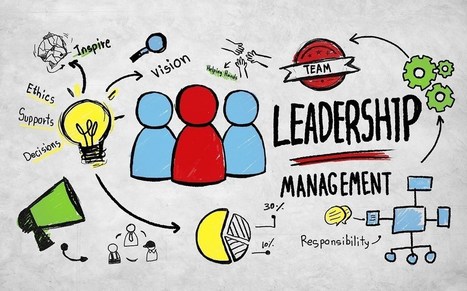
Organisations underestimate the difference between management or leadership. There is a common quality that separates them Via Roger Francis
Barry Deutsch's insight:
I hear this constant debate about managers and leaders. My perspective is that every job at a management level - department head, team leader, director, vice president - has elements of both.
Scoop.it!

The importance of employee engagement on the sales team is growing in the era of modern selling. Are you taking steps to improve it?
Barry Deutsch's insight:
This article came off the LinkedIn Sales Blog - but it's applicable to all teams, not just the sales team. One of the key points in the article is about spending time listening to employees talk about their personal lives, anxiety, how it affects them, and what they are doing to stay sane under pressure. Your employees want to know you care deeply about them as a person (one of the most important elements of engagement and retention) by listening deeply and frequently to them.
What's in your managerial bag when it comes to listening to personal issues and stories with your team?
Scoop.it!

This article discusses the essential qualities of leadership from a number of perspectives. It also discusses what we mean by bad leadership.
Barry Deutsch's insight:
Good articulation of the key elements of leadership, a nice review of good/bad traits, and tools to help improve the development of leadership qualities.
Scoop.it!

Peter Drucker (1909-2005), the late Austrian-born management consultant, once famously said that culture eats strategy for breakfast — i.e., while a sound business plan is excellent, nothing is more important than a company’s culture.
Barry Deutsch's insight:
Loved the quote from Drucker about Culture Eating Strategy.
Do you have a defined culture? What are the 3-5 key elements of initiatives that reinforce that culture - whether it be praise and gratitude tactics or healthcare/wellness plans?
No culture - or one that your employees make up - is a real problem in being able to attract and keep better people.
Scoop.it!

In engagement-centric organizations, you're likely to see stronger Net Promoter Scores, higher retention rates, more innovation and better financial performance.
Barry Deutsch's insight:
71 percent of employees indicating they would leave their current employer for a better job?
The author suggests you need a employee engagement strategy to prevent your best employees from leaving. The vast majority of companies I work with have NO process, structure, plan, or strategy to deal with employee engagement.
The approach of most companies appears to be "if employees show up for work, they must enjoy (be engaged) with their jobs.
What's your strategy?
Scoop.it!
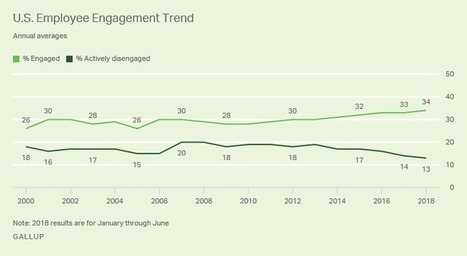
U.S. worker engagement has tied an 18-year high, with 34% now saying they are enthusiastic about and committed to their work and workplace.
Barry Deutsch's insight:
The good news is that employee engagement is on the rise - I'd like to think it's because I've been sounding the alarm for the last few years.
The bad news is that over 50% of your workforce is disengaged - they just don't care. They barely show up and do the minimum necessary - huge opportunity for most organizations.
Scoop.it!

From
qz

The comedian shared his tips on "Hello Monday," a new LinkedIn podcast.
Barry Deutsch's insight:
Seth Meyers breaks the mold holding people in a traditional box around their job - he actually encourages and supports side gigs and opportunities to spread their wings and realize their dreams while still working for him.
Are we moving in this direction with the younger generation?
Are we stuck in a mindset about careers and jobs based on 1970s assumptions?
Can supporting employees taking on other assignments outside of their job with you only work in creative fields - or can it be broader across more traditional disciplines like HR or finance?
I'd love to hear examples of bosses and companies that are supportive of helping their employees achieve their dreams.
Scoop.it!

Apprenticeships are making positive changes to many businesses up and down the UK. Richard Doughty looks at a few success stories. Via Roger Francis
Barry Deutsch's insight:
I'm surprised that more companies don't have apprenticeships as part of their portfolio to improve hiring, training, and on-boarding success.
Scoop.it!

This was a key finding in a management study I recently came across.
Barry Deutsch's insight:
This is a very scary statistic. It's so simple to put these recognition and non-monetary reward systems in place - why do companies ignore the studies that show a major reason employees leave is a lack of recognition?

's curator insight, March 7, 2019 2:27 PM
At Insightlink we see lack of recognition is often a key driver in employee engagement and job satisfaction. #EmployeeSurvey #HR
Scoop.it!
Barry Deutsch's insight:
This quote by Richard Branson is one of my favorite quotes. I am amazed at how many CEOs will not invest in training and development because they feel it's only giving employees the capability to seek work elsewhere. Is that not the ultimate in dysfunctional behavior?
How many studies do we need to look at that training and development is a powerful attraction, retention, engagement, and motivational tool?
Why do so few entrepreneurial companies see little value in training and development?
|







Chris makes a very good point here about the importance of listening and the correlation to engagement or disengagement - whether it be in team meetings, problem-solving sessions, or giving feedback.
My personal experience is that most managers/executives DO NOT know how to listen to employees. It's a learned skill. Many CEOs assume that their management team members must have decent listening skills since they carry a management title. NOTHING could be further from the truth.
If this is an important criterion for engagement, and it's a learned skill - why are we NOT training managers to be outstanding at listening?