Your new post is loading...

|
Scooped by
Barry Deutsch
July 5, 2012 4:43 PM
|
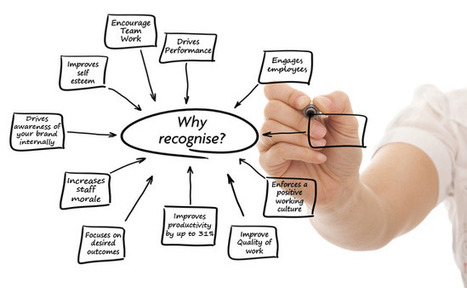
Why is an employee recognition scheme essential? Engaged employees are up to 43% more productive. Engaged employees are twenty times more likely to improve your customer satisfaction and loyalty, productivity...
Are you shocked that your company doesn't have a formal recognition program? - Barry Deutsch
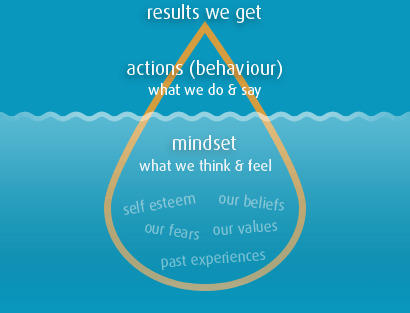
We need to create environments that cultivate employee engagement and passion; think of it as gardening. What can we do to create these kinds of environments?
Via Jean-Philippe D'HALLUIN
|
|
Scooped by
Barry Deutsch
June 9, 2012 3:10 PM
|
The emphasis on how HR uses information has become much more strategic and in this economic climate the use of information may form the distinction between the organisational winners and losers. Does your employee survey stack up?
"Who owns employee engagement?" More than half of the leaders surveyed said the organization does. But 100% of the highly engaged employees said they owned their own engagement. What are the factors that create a highly engaged employee, and how do you become one?
Via Charney Coaching & Consulting, Jean-Philippe D'HALLUIN
|
|
Scooped by
Barry Deutsch
June 1, 2012 2:47 PM
|
"It is an important part of the employer/employee relationship. Effective onboarding programs promote a number of benefits, including greater employee satisfaction, better job performance, greater commitment to the company, ...
Another article on the importance of onboarding which many companies - especially in the small business and entrepreneurial sector IGNORE - Barry
Barry Deutsch Partner IMPACT Hiring Solutions http://www.impacthiringsolutions.com/Blog
Have you read our FREE book - You're NOT the Person I Hire?
This best-selling book is available as a FREE digital download on our website.
|
|
Scooped by
Barry Deutsch
June 1, 2012 12:46 PM
|
Managers cite performance evaluations as one of their most disliked tasks, and employees aren't usually fond of them either. But what if you could turn evaluations into a tool that would unleash the power of performance in ...
|
|
Scooped by
Barry Deutsch
May 29, 2012 6:30 PM
|
Paul Alofs recently wrote a strong piece on Fast Company's blog regarding what he believed to be the 8 rules for creating a passionate work culture. These rules touch on everything from hiring, to work/life balance and even ...
The key is how to engage your entire workforce continually to be passionate. What steps are you taking? Do you have a structured and organized plan for accomplishing this task? What's your first step in the next 90 days? - Barry
Strong guidelines not rules - 13 key considerations in starting an employee engagement program.
Via Jean-Philippe D'HALLUIN
|
|
Rescooped by
Barry Deutsch
from Talent Engagement
May 24, 2012 11:30 PM
|
Many companies struggle with designing the right programs to effectively orient employees to the many facets of their roles. "Not integrating or on-boarding new employees can easily lead to lost productivity, poor performance, mixed results, and a hiring failure. The vast majority of companies stink at rigorous and systematic on-boarding of new employees - Barry"
Via emonalytics
|
|
Rescooped by
Barry Deutsch
from Smart Employee Management
May 23, 2012 6:23 PM
|
How can you incentivise and retain employees when you are being impacted by organisational cost cutting measures? Happening People offer you 'Our Top 5 for Incentivising and Retaining your Staff.' 1. Decide who will be ... "Companies give lip service to the idea of improving morale, satisfaction, recognition, and engagement. Without specific tactics and programs, it falls on the shoulders of those managers who take an interest in these areas. Companies will never succeed with retaining good people until it becomes integrated into the fabric of the culture. - Barry"
Via PI Europe HQ
The single most important factor in employee engagement is an employee's relationship with his or her direct manager. Return messages quickly - Be on time for meetings - Express appreciation for a job well done - Take a genuine interest in your employees - Be there "I agree with this statement - in my travels of executive search for 25 years and leading workshops for retention and top performers to over 40,000 CEOs and executives - the direct relationship between supervisor and subordinate is the most important element of employee satisfaction. Yet, many companies ignore this issue for training, development, reward and recognition programs - Barry"
Via Jean-Philippe D'HALLUIN
|
|
Scooped by
Barry Deutsch
May 16, 2012 3:26 PM
|
Modern business organizations are waking up to the enormous promise inherent in employee engagement strategies in the workplace.
|
|
Scooped by
Barry Deutsch
May 13, 2012 1:33 PM
|
Should companies return to their pre-recession approach to talent management or significantly change the way they manage talent? It is definitely not time to go back to business as usual.
In this article by Edward Lawler on the Forbes website, he blasts human resources for not being flexible enough to manage talent in a changing environment. Unfortunately, he doesn't specifically identify what human resources is doing wrong, nor does he describe in depth what human resources should be differently - expect for the generic concept of being more "flexible".
What are your thoughts on this article? Is it clear that he's identified a core issue in hr management, or has the article missed by being too generic?
|
|
|
Scooped by
Barry Deutsch
July 5, 2012 1:25 PM
|
I hear too often from managers, supervisors, “I don't have time for this.” I suspect they have time for hiring, onboarding, training? The tradeoff in time seems a no brainer. 2. Consistent Feedback. Gallup's Work Environment ...
How many CEOs believe that employees are engaged, commited, excited, turned-on, passionate, and motivated by the observation that they show up for work everyday? Can you believe the percentage of employees in your workforce that are disengaged? When is the right time to start to change this declining trend? - Barry Deutsch
|
|
Rescooped by
Barry Deutsch
from Leadership Tips To-Go
June 12, 2012 7:08 PM
|
Recently, my organization facilitated a roundtable session with fifteen young professionals. Their main concern was how to advance in a multi-generational workplace. Several of these young professionals felt that they didn’t belong or fit in their workplace; they were uncertain about who to trust and didn’t respect the manner in which they were being led. These young professionals were eager to learn the best ways their generation could take control, influence their workplace culture and start performing at the highest levels. They wanted to get noticed, create impact and at the same time discover how to start generating more income and accelerate their advancement. This three hour roundtable was intense, but we successfully identified what these young professionals were really looking for: how to most effectively teach their baby boomer bosses how they seek to be led. As one young professional said, “if my boss understands how I am wired to work, I will not only teach the organization’s old guard how to lead my generation, but my performance will help contribute to the organization’s success. I will make them more relevant.” This confident perspective changed the conversation and helped to define the following top five ways young professionals want to be led by their baby boomer bosses. 1. Empower us; don’t micromanage our talent 2. Sponsor us; serve as role models 3. Allow us to manage our own brand; don’t define us 4. Trust us; don’t question our intentions 5. Challenge us; don’t marginalize us More: http://www.forbes.com/sites/glennllopis/2012/03/12/5-ways-young-professionals-want-to-be-led/
Via Chris Chan
Engagement is not just a buzzword in corporate world alone, it’s everywhere; engage your customers in the business world, readers and viewers in the media world. Engaging a community has become far more obvious with the emergence of social media tools like Facebook and twitter and with people effectively utilizing it. People are connected with a click of a button however distant they might be. But why are we not able to connect or engage our own employees who we interact with everyday?
Via Jean-Philippe D'HALLUIN
|
|
Rescooped by
Barry Deutsch
from Social Business
June 6, 2012 8:06 AM
|
Corporations are starting to embrace technologies used to monitor employee Internet use, with 60% expected to watch workers' social media use for security breaches by 2015, according to a new report from Gartner.
Via Ali Godding
|
|
Scooped by
Barry Deutsch
June 1, 2012 1:46 PM
|
Build better relationships with employeesSacramento Business JournalAs an executive coach and people strategist, I have witnessed the performance, health and cost benefits that occur when employees are satisfied and well-regarded in their jobs.
Barry Deutsch Partner IMPACT Hiring Solutions http://www.impacthiringsolutions.com/Blog
Have you read our FREE book - You're NOT the Person I Hire?
This best-selling book is available as a FREE digital download on our website.
|
|
Scooped by
Barry Deutsch
June 1, 2012 11:46 AM
|
Breaking off the engagement: Study shows that even loyal employees become ...Phys.OrgAll businesses want "engaged" employees -- those who are committed to the success of the company and are willing to go the extra mile to see it flourish.
Barry Deutsch Partner IMPACT Hiring Solutions http://www.impacthiringsolutions.com/Blog
Have you read our FREE book - You're NOT the Person I Hire?
This best-selling book is available as a FREE digital download on our website.
|
|
Scooped by
Barry Deutsch
May 29, 2012 4:25 PM
|
Research is clear, organizational cultures where conflict is ignored or managed poorly are sure to experience higher levels of absenteeism, presenteeism (absent even while at work), accidents, lowered productivity, turnover, ...
What's the old adage - You are what you tolerate? Do you allow or encourage uncontrolled conflict within your organization? - Barry
|
|
Rescooped by
Barry Deutsch
from Good Management
May 25, 2012 1:35 AM
|
This is a facsinating article looking at engagement through a neuro-science lens. As well as being in the employee engagement profession I am also an avid reader of the new scientist and a Neuro Linguistic Programming master practitoner so exploring engagement from this perspective made it a brilliant for me. It takes further steps forward in explaining the 'why'' of employee engagement. If you are interested in getting under the skin of this topic then this is a great place to start. Well worth a read.
Via Ali Godding
|
|
Scooped by
Barry Deutsch
May 23, 2012 7:48 PM
|
"In an article on the Forbes blog, one of their contributing authors wrote that the number #1 CEO mistake is not having a "PEOPLE PLAN" - Barry"
|
|
Rescooped by
Barry Deutsch
from EmployeeEngagement
May 23, 2012 3:15 PM
|
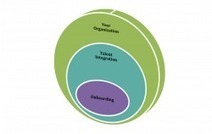
I like the distinction between Onboarding and Talent Integration "Good article discussing both the short-term and long-term elements of integrating and working with new talent - Barry"
Via Adam Shay
|
|
Rescooped by
Barry Deutsch
from LeadershipABC
May 21, 2012 7:56 PM
|
If loyalty is defined as being faithful to a cause, ideal, custom, institution or product, then there seems to be a certain amount of infidelity in the workplace these days.
Via Kenneth Mikkelsen
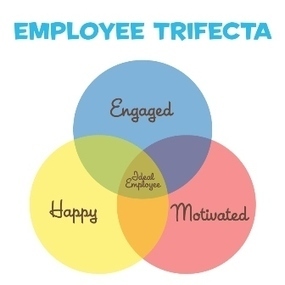
Businesses want happy, motivated employees who are also engaged. The trifecta of employee success. So, how do we make that happen? Is it empowerment?
Via Jean-Philippe D'HALLUIN
|