


The fixation on “culture fit” might be steering us wrong on both sides of the hiring table.


 Your new post is loading...
 Your new post is loading...
Your new post is loading...
 Scoop.it!
The fixation on “culture fit” might be steering us wrong on both sides of the hiring table. 
No comment yet.
Sign up to comment
Scoop.it!

Employee engagement and job satisfaction are not as similar as you think. Learn the difference to effectively recruit and retain developers
Barry Deutsch's insight:
Interesting article separating the idea of employee happiness and employee engagement. Which one yields the greatest additional discretionary effort? Although the article is focused around hiring developers - it could apply to any position.
Scoop.it!

In my last post, I mentioned that I would take the Study we did within the Vistage/TEC CEO and Senior Executive Community on Hiring Failure before we
Barry Deutsch's insight:
One of the worst elements of the hiring process is the traditional and tribal reliance on job descriptions. They are worthless useless as a predictor and management tool for performance - as they are typically used in most organizations. There must be a better way!
Scoop.it!
From
www

It's great to have everyone pulling in the same direction, but what if it's the wrong direction?
Barry Deutsch's insight:
I had the opportunity to present our Vistage workshop "You're NOT the Person I Hired" today to a group of CEOs in the LA area. We did a role play around defining success for the team on product development. As we got deeper into the role-play it was obvious not everyone was on the same page for the results needed by the company. This article I just read makes that same point using different words - the need to align everyone on the team on what are the outcomes - this is probably the greatest failure in execution by most companies. How good a job does your company do in aligning expectations around business goals?
Scoop.it!
Barry Deutsch's insight:
I loved this article on the impact of rudeness in working together - whether it be non-profit teams, executive management groups, or on projects. Rudeness, incivility is one of the killers of motivation and high performing teams. In my own work as a non-profit Board President, I get to improve the civility of how people interact, and continually reinforce group norms around civility. One of the books I am reading right now is titled "Choosing Civility". What do you tolerate with your team?
Scoop.it!
When employees don't perform, it's often the fault of management, not the employee. Effective feedback improves performance, builds confidence and self-esteem
Barry Deutsch's insight:
I find the vast majority of managers and leaders are disgusted by their performance management process. What's the worst part - zero training on how to give effective feedback. We just assume because someone has a manager or executive title, they should be great at giving feedback. Nothing could be further from the truth. How much are you investing to teach your executives and managers to give outstanding feedback?
Scoop.it!
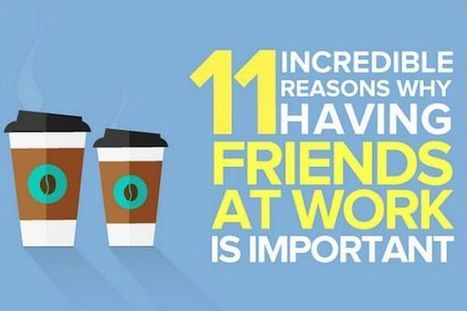
This infographic reports that 50 percent of employees who have a best friend at work say they feel a strong connection to their company.
Barry Deutsch's insight:
Great infographic on the importance of friendships at work. My perception is that most leaders and managers do not give this subject much thought - however, Gallup has shown through their surveys and in the book "First Break All The Rules" that it's one of the most important elements of employee satisfaction. What are you doing to foster work friendships and relationships?
Scoop.it!

Millennials are taking over the workforce. Organizations who wish to compete for millennial talent must first understand the experiences that shape them.
Barry Deutsch's insight:
Almost all of my clients are experiencing frustrations in recruiting and retaining millennials - particularly in the merging of generational differences in work. Solving this clash of culture will be one of the keys to building high performing organizations in the near future.
Scoop.it!
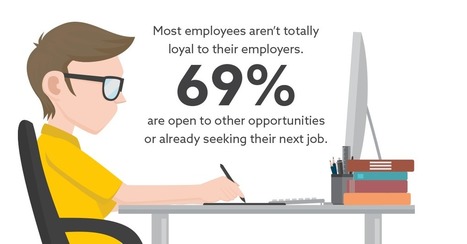
Article reposted with permission from raptmedia.com Technology—particularly the internet and social media—is invariably changing the way people engage, make decisions and exhibit loyalty. Fragmented content consumption, constant distraction, and consumer control continue to shift the rules on all of us. Not only is this the new reality for brands trying to reach and inspire a connection…
Barry Deutsch's insight:
"A staggering 69 percent are open to other opportunities or already seeking their next job." Can you comprehend that almost 70 percent of your workforce is right now trying to see if the grass is greener somewhere else? What are you doing about it? Do you have a plan?
Scoop.it!

Learn more about employee happiness in a new report
Barry Deutsch's insight:
Interesting research once again confirming employee satisfation and happiness is not tied to compensation - which is the gut first impression answer by most CEOs, executives, and managers. Learn more about some of the key elements that drive retention around engagement, happiness, and job satisfaction.
Scoop.it!
The human brain thrives on praise, but coming up with ways to achieve that can be tricky. Here are 40 employee recognition ideas that can help.
Barry Deutsch's insight:
Some great ideas in this article on employee recognition. Study after study has proven that employee recognition is one of the most important elements of employee engagement and satisfaction?
Give a few of these a spin - let me know which ones worked great and which ones didn't. Vary them quarter by quarter. Try something new for once. Experiment, innovative, challenge your traditional thinking about what employees want for recognition.
Scoop.it!
Many are good. Some are superior. And a few--just a few--are exceptional. Here's how to tell the difference.
Barry Deutsch's insight:
Great article by Jeff Haden. His point about the characteristics of an exceptional employee not appearing on the performance evaluation - it should be on there. I do agree with his point about proactivity and initiative - this is the number ONE stand-out trait of high performers.
Jeff claims these high performers can turn on and off their unusual personalities easily - that they can "self-moderate", or to use an overworked term, they have high emotional intelligence.
My experience has been that most of these high flying star employees can't self-moderate and typically have low emotional intelligence. Many times the team is forced to tolerate their behavior (which is a direct conflict with the culture) because the boss is in love with their performance and blind to the chaos they create on the team (or perhaps the boss likes the idea that the employee is their surrogate for shaking things up. Either way, having this lone ranger on the team is not only dysfunctional, but many good employees will not put up with it.
Scoop.it!
Hi, I'm Sheila Kamuda with coaching advice for the office and beyond. playniceadvice.blogspot.com Hope you enjoy, leave comments, subscribe, like, share.
Barry Deutsch's insight:
Shelia Kamuda has a nice blog and great little video series about employee engagement, satisfaction, culture, and workplace behaviors. I recommend reading and watching the content she shares.
|
Scoop.it!

After almost a decade of coaching high school girls’ basketball, I’ve discovered a few lessons that enable groups of diverse individuals to become a
Barry Deutsch's insight:
I've been coaching HS Girls Basketball for 10 years - and before that another decade around coaching club basketball. Many of my greatest lessons about employee engagement, teamwork, happiness, satisfaction, and discretionary effort (proactivity and initiatve) come from coaching at the HS level. Many of the girls who have played for me don't realize these lessons until long after they've left high school.
Scoop.it!

Employee engagement can and should simply be measured by asking employees one question.
Barry Deutsch's insight:
Should measuring employee engagement boil down to just one question. Not sure I agree with this article on INC - seems too simplistic of a recommendation/solution to a very complex and difficult issue. What are your thoughts? Would you use just one question?
Scoop.it!

Over the past 25 plus years, my partner, Brad Remillard, and I have researched why hiring mistakes and errors occur. Between us we’ve conducted over
Barry Deutsch's insight:
How many times do you find yourself and your fellow executives making the same hiring mistakes over and over again? Is this not the best example of insanity by something again and again - hoping that it will finally work? Fix your hiring mistakes and errors now - boost your hiring success well above the standard of a 50/50 batting average.
Scoop.it!

Employees across the world have the same core needs —including recognition, feedback, personal growth, and work-life balance— to succeed at work.
Barry Deutsch's insight:
This Office Vibe study is gaining a lot of attention. It's one of the largest studies conducted in recent years and mirrors a lot of the research from the Gallup organization on employee happiness, satisfaction, and engagement. Note the statistic that only slightly over 50% of employees would recommend their company to friends. If your Net Promoter Score was that low, you would fire your Marketing-Customer Success-Sales Executive. How can you allow such a low level of satisfaction to exist in your organization?
Scoop.it!

From
www
Insights from Google's new study could forever change how teams are assembled.
Barry Deutsch's insight:
Interesting practical research by Google on team research that extends into why people enjoy working in a company or with a particular team. This article focuses on teams - but could actually be an article about retention. Notice the points about work being meaningful to each person, and that it matters to others. This goes all the way back to Maslow's Hierarchy of Needs and basic motivation.
Scoop.it!
From
medium
Employee engagement isn’t something that’s nice to have. It’s necessary for a productive, fulfilled, and loyal workforce. Fortunately, there are five ways to improve engagement within your company.
Barry Deutsch's insight:
We all know that it's important to focus on employee engagement. This article talks about some easy tactics to implement to boost employee engagement. One of the things I zeroed in on with this article was the need to set goals. As you know this is my mantra of the number one reason hiring and retention fails is through a lack of goal setting. I find the statistic interesting that goal setting can improve impact/productivity by 12-15%. I actually think that statistic is dramatically understated for the true impact of flawless execution through effective goals setting.
Scoop.it!

Three key metrics involving recognition, transparency and peer relationships show a decline in employee engagement. All of these issues are fixable with effective management.
Barry Deutsch's insight:
Scary statistic ALERT: Quote from the article: "The fact that barely more than one in four employees feels valued is a sad commentary on management." If this quote doesn't make your head spin in the continuing tight job market where your best employees have targets on their backs and are being picked off one-by-one by your competitors. The real issue is not whether one in four are feeling valued - the real issue is that you are doing nothing about it.
Scoop.it!
From
www
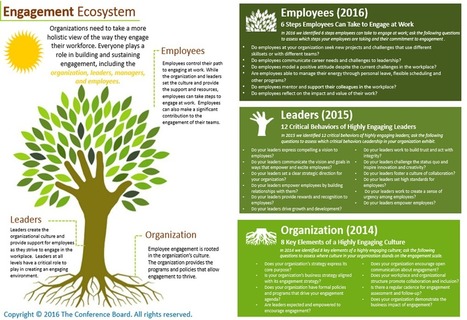
Research from the The Engagement Institute examines how highly engaging cultures are forged and how employees can play an active role in their own engagement.
Barry Deutsch's insight:
The author states "Despite increasing investments in employee engagement surveys, programs, and interventions, fewer than one third of workers around the globe are engaged." Another study validating the primary information generated from Gallup's research. My question is how long can companies withstand dropping levels of employee engagement, satisfaction, effort, and commitment?
Scoop.it!
One study, 23,000 employees, 45 countries. The results? Priceless.
Barry Deutsch's insight:
Interesting study that shows why/when employees give an extra effort - acting with initiative. It mirrors much of what the Gallup research has shown about work satisfaction. What was the number ONE point - it start with an employee's manager. If you have weak/average managers, they'll create weak/average teams that generate weak/average results. How would you rate your managers?
Scoop.it!
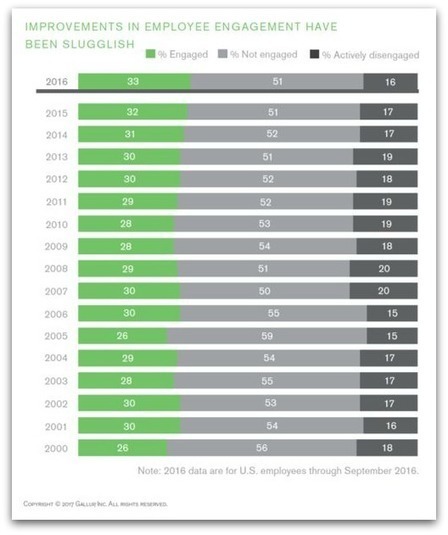
According to Gallup, "51 percent of U.S. employees say they are actively looking for a new job or watching for openings." Think about that for a minute. A little more than half of your employees have at least one foot out the door.
Barry Deutsch's insight:
Gallup just confirmed through their research the statement I've been making for years - that at least 50% of your workforce at any given time is open to a new opportunity.
According to Gallup, "51 percent of U.S. employees say they are actively looking for a new job or watching for openings." Think about that for a minute. A little more than half of your employees have at least one foot out the door.
What does this say about your current weak efforts at retention? Is it time for a check-up on how your retaining not just your most talented (they leave first), but also everyone else?
Scoop.it!
Barry Deutsch's insight:
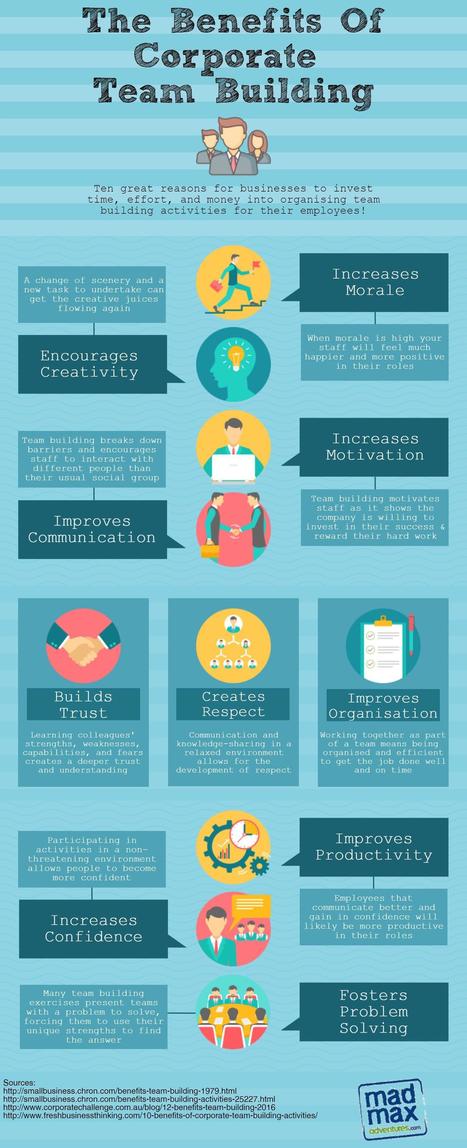
This infographic struck a chord with me - it got me thinking and wondering why more companies don't focus on team building. Everyone seems to assume that if you're working in our company, you've got all the "team knowledge" you need to be successful. We all know that's not true - yet our investment in team building seems woefully inadequate.
Scoop.it!
From
gusto
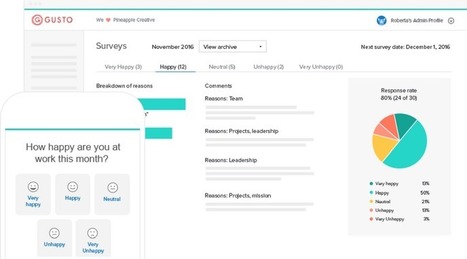
Learn all about Gusto's latest and greatest HR feature — Employee Happiness Surveys.
Barry Deutsch's insight:
Is anyone conducting employee satisfaction or happiness research, surveys, studies in their organization? What tools are using and how effective are these in improving employee happiness? Check out this tool I stumbled across called Gusto - would love to hear your feedback on what looks like a SaaS approach to employee surveys
|







Opposing view of the argument to work on your culture. The author suggests that perhaps all the work on "culture" is over-rated and harmful. Do you hold this same view? Do you think the obsession with creating a better culture has negative effects?