


These questions seem straightforward on the surface, but they can reveal a lot of intel on the company.


 Your new post is loading...
 Your new post is loading...
Your new post is loading...
 Scoop.it!
These questions seem straightforward on the surface, but they can reveal a lot of intel on the company. 
No comment yet.
Sign up to comment
Scoop.it!

This is what the Amazon founder looks for when he wants to know if someone is really smart.
Barry Deutsch's insight:
Do you measure intellectual humility in your interviews. I would expand upon this idea of not just looking at where you went wrong and then adapting - but looking into the process by which candidates come to conclusions or recommendations.
One technique is to use case studies, role plays, and homework assignments to get at how someone critically examines a problem or issue.
Through this technique and Jeff Bezos' ideas we're starting to get at how someone thinks, raw intellect, problem solving, analytical skills, and inquisitiveness.
Scoop.it!

Saying thank you is one of the easiest and best forms of employee recognition in the workplace. Here are forty ways to say thank you at work.
Barry Deutsch's insight:
I recently posted an article on LinkedIn in my Retention Hot Tip Series about giving praise. This article complements my blog post with other tactics of saying thank you. My perspective is that most employees feel underappreciated, don't understand how they matter, and don't feel expending extra effort is worth since their manager doesn't seem to care.
Scoop.it!
From
bonus

Disengaged employees cost businesses an estimated $550 billion dollars last year in the United States alone. Employee Recognition can fix that.
Barry Deutsch's insight:
So few companies are focused around employee engagement. As the author indicates, the cost is astronomical. Culture, morale, productivity, and customer satisfaction are just a few of the areas affected by employee engagement.
If these points are well-researched and accepted - why then do most companies and executives choose to ignore the fundamental issues around improving employee engagement?
Scoop.it!

A breakdown of the main components of building a successful employee development plan, and the importance of feedback and follow-through as a manager.
Barry Deutsch's insight:
I'm curious if your company has an employee or personal development plan for all employees? If not, this could be an enormous area for increasing retention. Helping people grow, learn, develop, and get better at their jobs is one of the most important part of an effective retention program.
In just a few years - the issue will be finding talent, it will be hanging onto the talent you've got before they get poached by a competitor.
Scoop.it!

Takeaway #1 – Take care to only hire “A” players
Barry Deutsch's insight:
My favorite quote in this article was Takeaway #1 – Take care to only hire “A” playersSo many problems get solved by hiring A players: engagement, retention, lack of law suits, higher productivity, more people on the pareto contribution list, more discretionary effort according to Gallup, and more time for you as a leader in not spending the bulk of your time on problem children - on the deadbeats - on playing adult day care way too often.
However, most companies are unwilling to invest in the time it takes to hire A players through spending more time defining success before hiring, scrubbing the bushes and just accepting anyone who shows up on your doorstep as the candidate pool, and having a rigorous process to vet, validate, and verify the truth with candidates.
Why do we accept hiring average, mediocre, minimally qualified candidates - and then get mad when it happens? Wouldn't it work better if we just FIXED the process?
Scoop.it!

Stop the hunt for hiring great employees. Instead, develop a culture in your organization that develops a great, highly-engaged workforce.
Barry Deutsch's insight:
WOW! Earth-shattering!
Here's the quote that caught my attention:
If the workforce is so important to organizational success, why does Gallup tell us that 87% of employees worldwide are not engaged?
Why are so many companies still stuck in a Victorian Age of management with supervisors watching the clock, picking on negatives, and micro-managing their people.
Have we not yet come to the conclusion this is de-humanizing, de-motivating, and a complete deterrent to accomplishing great results?
What do you think it might take for this monumental shift in corporate management to occur?
Scoop.it!

A recent article from The Times shined a spotlight on the seemingly perennial problem of low productivity facing UK Plc, and how proper management training can help
Barry Deutsch's insight:
I loved this article headline. Do you have managers in your organization who were great "doers" - thus you promoted them to oversee other "doers"? The problem is that they are "accidental managers" and are draining your productivity, not to mention a number of other terrible ills they inflict upon your organization. What are you doing about fixing the problem of accidental managers - folks you are supervising the bulk of your employees and have no right to be in a managerial role?
Scoop.it!
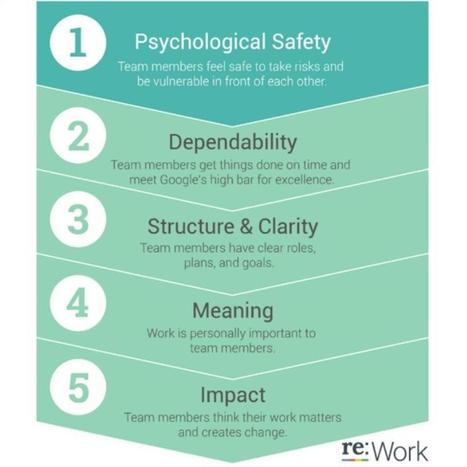
There are five keys to cultivating optimal teams, and they all come back to safety, belonging and mattering. Here's how to know where your team is lacking and what to focus on to fix it.
Barry Deutsch's insight:
Have you had a chance to review the research Goggle did on the conditions or elements that led to optimal team work. Fascinating stuff to improve how your teams work. Are you focused around any of these issues in improving the results and outcomes your teams generate?
Scoop.it!

From
www
Getting new hires off on the right foot can make all the difference.
Barry Deutsch's insight:
Sometimes we forget about the importance of the on-boarding process as an effective retention tool. How do we wrap our arms around our new hire, making them feel coming aboard was one of the decisions of their life. Why do we sometimes cast them aside making them feel isolated and lonely?
Scoop.it!

We've rounded up tips and tactics for building employee retention and fostering a happy workplace that makes people want to stick with you.
Barry Deutsch's insight:
Great article on Mashable about keeping employees happy. How many studies have you read over the last 4-5 years that talks about the importance of feedback - yet nothing has really changed.
Scoop.it!

"Just yesterday, a CEO in one of my workshops on retaining people, “You’re the Person I WANT to KEEP”, asked me what to do about a manager in his company that refused to train and develop his team because he felt he was training people for other companies - does this sound dysfunctional to you?"
Barry Deutsch's insight:
Training and personal development are two of the most effective levers you control to improve employee happiness, engagement, and satisfaction. Studies show that companies who invest in training and development attract, retain, and have above average results. Why are you not investing more in training?
Scoop.it!

"How many of your employees in any given month are going on-line to a job board (Monster, Craig’s List, CareerBuilder, Indeed, or LinkedIn), and looking at job openings. Most CEOs and Senior Executives have told us that this number fluctuates between 40-60% - for IT and Engineering roles it can be hovering near mercenary levels."
Barry Deutsch's insight:
Do you have a strong retention program in place to prevent your best talent from thinking about whether the grass is greener somewhere else. Just like having a strong hiring program - you also need to have a strong retention program. Most companies have zero to bits/pieces of a retention program. Are you willing to see your best talent head for the door as the job market continues to heat up?
|
Scoop.it!

"High turnover is a costly management problem which includes expensive training and lost productivity."
Barry Deutsch's insight:
Every organization should by surveying their employees for cultural and fit alignment. This article has a great set of questions related to how employees view their managers - which is the second most common reason people quit their jobs.
I would highly recommend using the Gallup Employee Survey of 12 dimensions to understand what percentage of your work force is engaged - and what you need to do to raise that number.
Scoop.it!
![The Overlooked Impact of Your Company Culture [FREE WORKSHEET] | Retain Top Talent | Scoop.it](https://img.scoop.it/PfRiw4vrqnZDRRRtVkv4HDl72eJkfbmt4t8yenImKBVvK0kTmF0xjctABnaLJIm9)
How can you convince your leadership that investing in people, your company culture, and employee engagement should be a priority? Check out these surprising [and convincing] stats, and download our free Culture Worksheet to get the conversation going in the right direction.
Barry Deutsch's insight:
Good article on the impact of culture in your company. I zeroed in on this quote:
"According to Gallup, disengaged employees are almost twice as likely as engaged employees to seek new jobs. And it’s not just the disengaged ones that you should worry about - 51% of U.S. employees say they are on the lookout for new jobs."
Is that not frightening? The entire job market is about to degenerate into pure poaching. We could be looking at another 10-12 years of an increasingly difficult job market for employers. How do you protect your existing employees from considering that the "grass might be greener elsewhere?"
Scoop.it!
Barry Deutsch's insight:
Good reminder on the key elements of what Gallup identified - autonomy, training/development, personal growth, being challenged - all of it tying back to Maslow. Yet, we keep forgetting these underlying elements of what drives people to perform at the peak of their ability.
Scoop.it!
![How Employee Engagement Impacts Customer Experience [Infographic] | Retain Top Talent | Scoop.it](https://img.scoop.it/boKJE05Z3nFkvXB7rSIY4zl72eJkfbmt4t8yenImKBVvK0kTmF0xjctABnaLJIm9)
Learn about the importance of employee engagement, and how investing in it can improve customer experience.
Barry Deutsch's insight:
Is there any doubt that there is a strong correlation between employee engagement and customer engagement/quality of experience?
Great infographic demonstrating simply the correlation.
My question is if it's that rock solid of a correlation, why are more companies not investing in employee engagement, and why are more companies not tracking the metrics around employee engagement and customer experience?
Scoop.it!

What can be seen, heard and experienced by employees and customers, is unique to every business, and is more successful in some than others? Culture isn’t tangible, but it is unavoidable and manageable; it’s the sum total of a business’s values, ethics and beliefs, perpetuated by its people through interactions with peers and customers. So, …
Barry Deutsch's insight:
Are your younger workers demanding more flexible work hours and the chance to work from home. Have you tried to experiment with virtual work arrangements. It's one of the strongest desires from the younger generations. Are you adapting or resisting? Is the lack of a structured approach to managing virtual employees limiting your ability to hire younger talent?
Scoop.it!

A good onboarding experience can set a new employee up for success. Check out this step-by-step guide to onboarding new employees.
Barry Deutsch's insight:
I am in the middle of updating my retention workshop called "You're the Person We Want To Keep".
One of the slides is about on-boarding since I get this question every time. In my research for this one element of the retention program, I came across this interesting article I wanted to share on the subject of on-boarding.
There are some real benefits from changing our approach - so many new employees either get off on the right foot - or their invisible forehead sign starts flashing "this place sucks" by about the 3rd day.
What's the biggest thing you've done to change your on-boarding program in the last year?
Scoop.it!

If you’re committed to helping your managers coach but the actual practice of coaching hasn’t stuck, try these surprising tips.
Barry Deutsch's insight:
73 percent of managers had some form of coaching training, but only 23 percent of people being coached (fewer than one in four!) thought that the coaching had a positive effect on their job. That statistic stinks! Employees want to be coached like a championship team - if you can't provide it - they'll go somewhere else to get it.
Scoop.it!

"Most Job Descriptions are worthless as a tool for predicting future performance"
Barry Deutsch's insight:
Why do you still use job descriptions as the core document in defining work? It does not define outcomes, deliverables, expectations, performance, results, KPIs and metrics. It has a unfurling roll of irrelevant lists of experiences, education, skills, and knowledge. The traditional job description doesn't come close to describing how someone would apply all these items in the context of their role.
Scoop.it!

There are many benefits of employee engagement, but there’s one benefit that isn’t as well known - employee engagement is contagious!
Barry Deutsch's insight:
Engagement is contagious. However, when so few of your employees are engaged, it's hard to build a momentum of contagious engagement. When you have more engaged employees, their energy, enthusiasm, passion spreads like wildfire.
Scoop.it!

"We’re in a full-fledged candidate’s job market. The frightening news for employers is that we’re nowhere near the peak."
Barry Deutsch's insight:
Just like a hiring process, you should also have a retention process. Praying that employees love their job and your company because they show up for work every day could lead to your best talent exiting over the next few years. You need to be intentional about working on culture, feedback, engagement, mediocrity, non-monetary rewards and recognition to mention a few key areas. When should be the best time to create a retention process or system?
Scoop.it!

Happy employees = happy customers. It seems obvious, so why do so many companies overlook the employee experience when they set out to improve the customer experience? For one, companies often strugg…
Barry Deutsch's insight:
The author writes from the perspective of improving the customer experience - but talks about how the employee experience has to come first. Interesting trend developing in recent surveys - particularly among the younger generations - is that they want a more flexible work schedule and opportunity to work from home. What does this say about supervision, performance management, and work productivity - particularly for companies that are not prepared to manage flex time and remote working?
Scoop.it!

"A strong culture that aligns with a specific vision and strategy is a winning combination."
Barry Deutsch's insight:
Think about the most successful organizations - for-profit, non-profit, educational, start-ups, large companies - my experience in 30 years - like the author of this article - is that the most successful organizations focus around culture. Are you spending time defining it, managing it, and communicating about it?
|





Could your managers answer these questions? What are the questions candidates ask in your interviews to get a glimpse of your culture?
Could all your managers articulate in a few sentences the culture of your company - would your rank and file agree with that perception?